
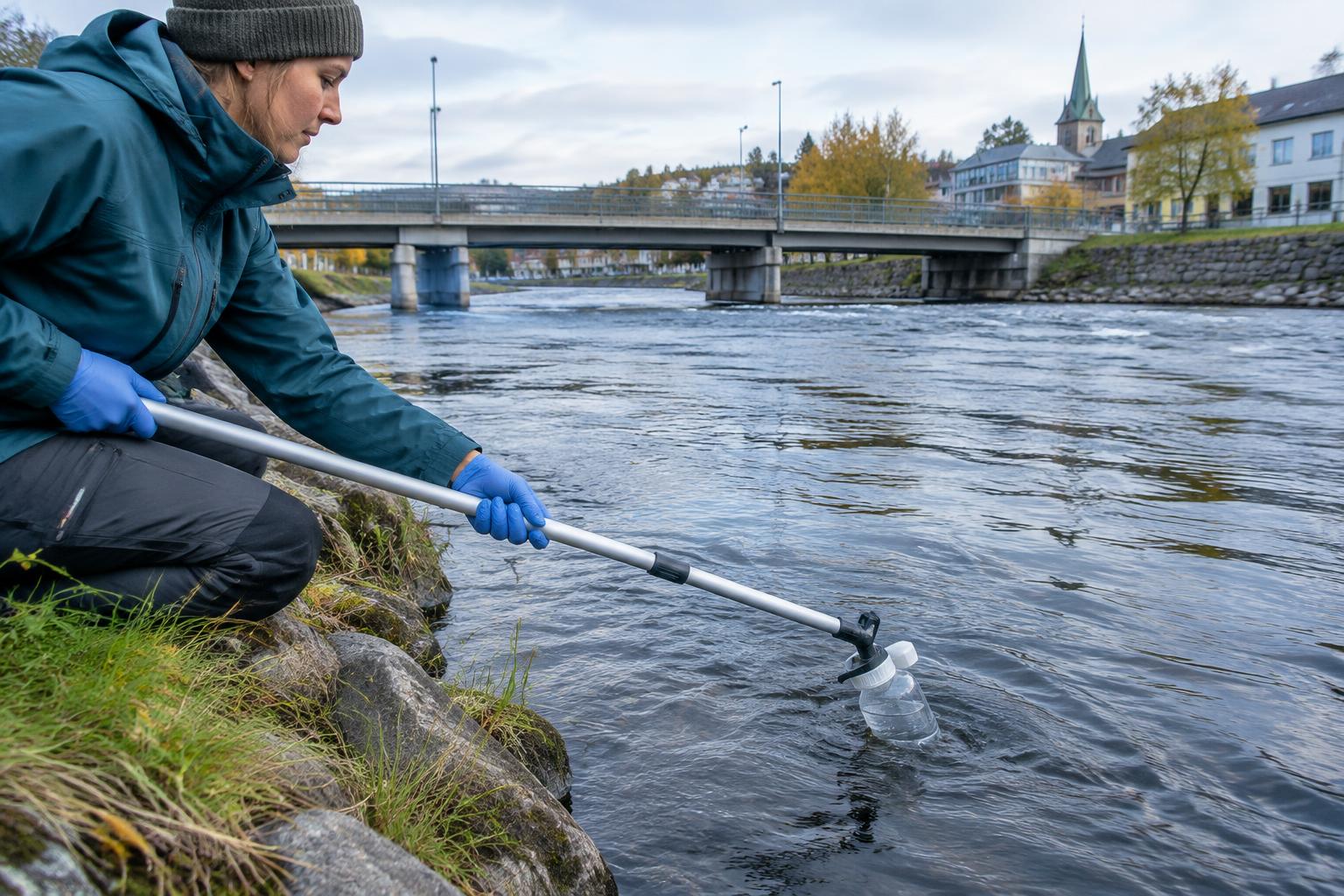
Illustrative environmental monitoring: river water sampling beside a bridge and urban riverbank

BioCell Analytica · Environmental Monitoring

See the biological effects of chemical pollution.

Understand chemical mixture activity in rivers, lakes and receiving waters — and turn monitoring results into meaningful environmental insights.

Environmental waters contain complex mixtures of known and unknown chemical contaminants.

BioCell Analytica measures their combined biological activity using advanced effect-based methods, helping environmental organisations compare monitoring locations, follow changes over time and prioritise further investigations.

EU water policy

Effect-based monitoring is entering EU water regulation.

A new milestone for European water monitoring.

Directive (EU) 2026/805 marks an important step towards incorporating chemical mixture effects into European water monitoring.

From 2030, EU Member States must conduct a two-year comparative programme using effect-based methods to monitor estrogenic activity at selected surface-water monitoring sites, alongside conventional chemical analysis. A key advantage of estrogenic effect-based methods is their high sensitivity, allowing biologically relevant activity to be detected at concentrations where conventional targeted chemical monitoring may fail to quantify individual hormones.

For environmental authorities, monitoring organisations and consultants, this creates a clear reason to gain experience with effect-based methods and prepare future monitoring strategies.

2027

Technical specifications

The European Commission is required to establish technical specifications for estrogenic effect-based monitoring by 1 December 2027.

2030

Effect-based monitoring programme

A two-year comparative monitoring programme begins, with sampling and analysis at least four times per year at selected monitoring sites.

The value of effect-based environmental monitoring

Turn biological effect measurements into actionable environmental insights.

01

Compare monitoring locations

Where is biological activity elevated?

Measure and compare biological activity across rivers, lakes and receiving waters. Comparisons between monitoring locations, including upstream and downstream sites, can reveal spatial patterns and help identify areas requiring closer investigation.

02

Track environmental changes

How is biological activity changing over time?

Repeated measurements help monitor trends, seasonal variation and changes in chemical mixture activity. This provides complementary information for long-term environmental monitoring programmes.

03

Prioritise environmental investigations

Which findings deserve closer attention?

Use biological effect measurements, relevant reference data and scientifically derived effect-based trigger values to identify results that warrant further assessment. The findings can help guide monitoring priorities and follow-up investigations.

Scientific evidence · Ecological interpretation

From biological activity to meaningful environmental assessment.

Measuring biological activity is valuable. Understanding its environmental significance makes the results actionable.

Research by scientists at BioCell Analytica has contributed to the development of effect-based trigger values that support the interpretation of biological activity in environmental waters.

782

Water samples

Androgenic activity assessed across several water categories collected in Sweden.

0.4 ng DHT-eq/L

Proposed ecological trigger value

A scientifically derived, assay-specific effect-based trigger value for androgenic activity.

8%

Of surface-water samples

Androgenic activity exceeded the proposed ecological trigger value in 8% of the investigated surface-water samples.

Derivation of an ecological effect-based trigger value for assessment of androgenic activity in water

Oskarsson, Mandava & Lundqvist · Journal of Hazardous Materials · 2026

Read the scientific publication

Real-world evidence · Swedish receiving waters

What receiving waters reveal about chemical mixture effects.

In a project published by Svenskt Vatten Utveckling in 2025, BioCell Analytica investigated biological activity in wastewater and receiving waters associated with seven Swedish wastewater treatment plants.

The results revealed differences in biological activity between monitoring locations and endpoints. Although no systematic increase could be linked to treated wastewater discharges, elevated activity in some receiving waters highlighted the value of investigating broader environmental contamination and additional pollution sources.

Effect-based monitoring helps identify environmental patterns and guide further investigations.

Interpretation that supports environmental decisions

Extensive experience. Meaningful interpretation.

With more than 6,000 effect-based measurements and specialist expertise in toxicology, BioCell Analytica helps customers interpret biological activity using relevant historical data and scientifically derived effect-based trigger values.

Our results provide valuable context for environmental monitoring and help prioritise further investigations.

6,000+

Measurements

Extensive analytical experience across multiple water types.

Scientific expertise and interpretation

Quality-assured laboratory services

Established analytical procedures and ISO/IEC 17025 accreditation for specified methods and sample matrices.

Wastewater Treatment

Understand treatment performance and residual biological effects.

Drinking Water

Add an additional layer of drinking water quality control.

Gain a broader understanding of your environmental water quality.

Add biological effect measurements to your environmental monitoring programme.

Whether you're investigating a receiving water, comparing monitoring locations or planning long-term assessments, BioCell Analytica can help you choose suitable analyses and interpret the results.